Dim Sum in Guangzhou: How to Order, Prices, QR Menus
Last checked October 19, 2026 against official sources. How we check

Quick answer
Dim sum in Guangzhou is eaten as 早茶 (morning tea): sit, pay a per-person tea charge, then order from a trolley, a paper tick sheet or a QR menu. Travel sites put tea at ¥10 to ¥20 each and plates at ¥15 to ¥45. Since May 1, 2026, a city rule requires a tea choice if a tea charge applies.
Key facts
| Price | Tea ¥10–20 per person; plates ¥15–45; ¥80–200 for two at a standard restaurant (travel sites, not official) |
|---|---|
| Pay | Set up Alipay or WeChat Pay before you sit (see the payment guide) |
| Order | Trolley, paper tick sheet or table QR code |
| New rule | Menus must say 传统方式现场制作 or 非传统方式制作 since May 1, 2026 |
What is dim sum in Guangzhou?
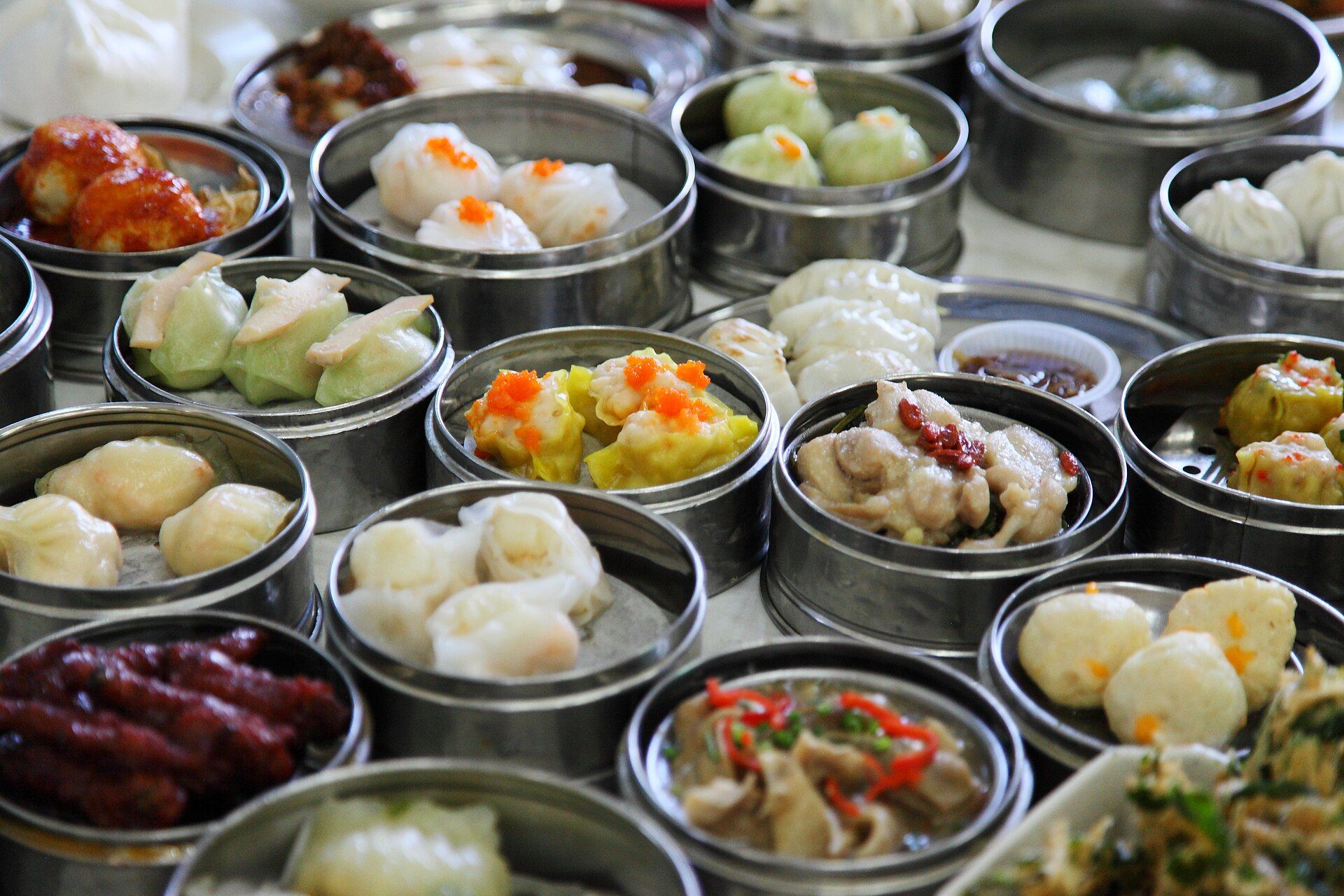
Dim sum (点心, diǎnxīn) are small steamed, fried and baked dishes. In Guangzhou you eat them as part of morning tea (早茶, zǎochá), also called yum cha (饮茶): you sit for an hour or more, drink tea and share plates. It is a social meal and a local habit, not a quick snack. The terms dim sum, yum cha and morning tea mean the same meal, and a Guangzhou local says 饮早茶. The Cantonese tea culture guide covers the teas and the table manners.
How do you order dim sum?
A travel guide describes three ways to order. Which one you meet depends on the restaurant.
| Method | How it works |
|---|---|
| Trolley | Staff push carts past tables. You point at what you want and they stamp or tick your bill |
| Paper tick sheet | A printed order form with boxes for each dish; you tick and hand it to a waiter |
| QR code | A code on the table opens a photo menu on your phone; you order and add dishes through it |
One Reddit user wrote in November 2025 that “a lot of the time you’re just guessing at what you’re ordering”. For a tick sheet, camera translation such as Baidu Translate works on paper forms, per China Navigators. Set up payment before you sit. The Alipay and WeChat Pay guide and the apps guide show how.
What is the tea charge?
The tea charge (茶位费, cháwèifèi) is a per-person fee added to the bill. China Navigators says tea is charged separately, usually ¥10 to ¥20 per person.
A city rule now covers it. The Guangzhou Morning Tea Heritage Protection Regulation (广州早茶传承保护规定) took effect on May 1, 2026, per a Yangcheng Evening News interview published by Guangming Online (gmw.cn). Its main points, as reported:
- Operators must list all charges clearly.
- If a restaurant charges a tea fee, it must offer a choice of teas, including black, green, oolong, pu’er and chrysanthemum.
- Menus must say whether each dish is 传统方式现场制作 (made on site in the traditional way) or 非传统方式制作 (made another way).
- Traditional on-site dim sum must be served within 24 hours of being made.
- Prices on the menu, the price tags and the ordering app must match.
- The same dish may be priced differently by method. Sixth Tone’s report on the draft gave an example of steamed dumplings at ¥36 when freshly made and ¥20 when pre-made.
These come from news reports, not the regulation text. Enforcement varies, so check the menu and ask what the tea charge covers.
How much does dim sum cost?
These are travel-site ranges, not official prices.
| Item | Typical price | Source |
|---|---|---|
| Tea charge | ¥10–20 per person | China Navigators |
| One small plate | ¥15–45 | China Navigators |
| Two people, standard restaurant | ¥80–200 | China Navigators |
| Two people, upscale venue | ¥200–500 | China Navigators |
A table of two usually orders eight to twelve plates, per the same guide. Order a few dishes first and add more.
What should you order?
China Navigators lists these classics. Say the Chinese name or point to the picture.
| Chinese | Pinyin | English |
|---|---|---|
| 虾饺 | xiājiǎo | Steamed shrimp dumpling (har gow) |
| 烧卖 | shāomài | Open-topped pork and shrimp dumpling (siu mai) |
| 叉烧包 | chāshāobāo | BBQ pork bun |
| 肠粉 | chángfěn | Rice noodle roll |
| 萝卜糕 | luóbogāo | Pan-fried turnip cake |
| 蛋挞 | dàntǎ | Egg custard tart |
| 凤爪 | fèngzhuǎ | Chicken feet in black bean sauce |
| 糯米鸡 | nuòmǐjī | Sticky rice in lotus leaf |
| 春卷 | chūnjuǎn | Fried spring roll |
| 马拉糕 | mǎlāgāo | Steamed brown sugar sponge cake |
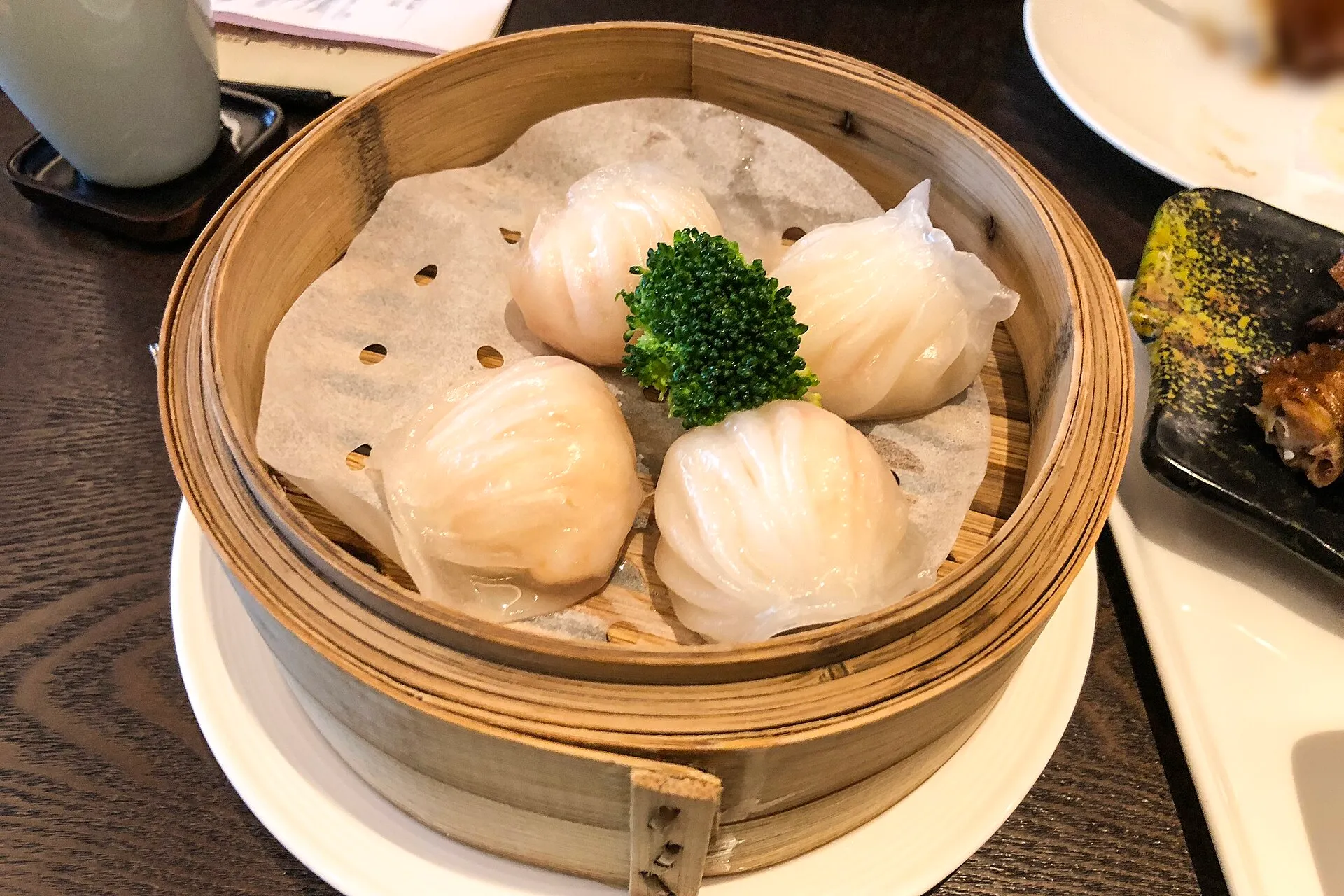 Photo: N509FZ · CC BY-SA 4.0 Details
For a sweet finish, double-skin milk (双皮奶) is a common Cantonese dessert.
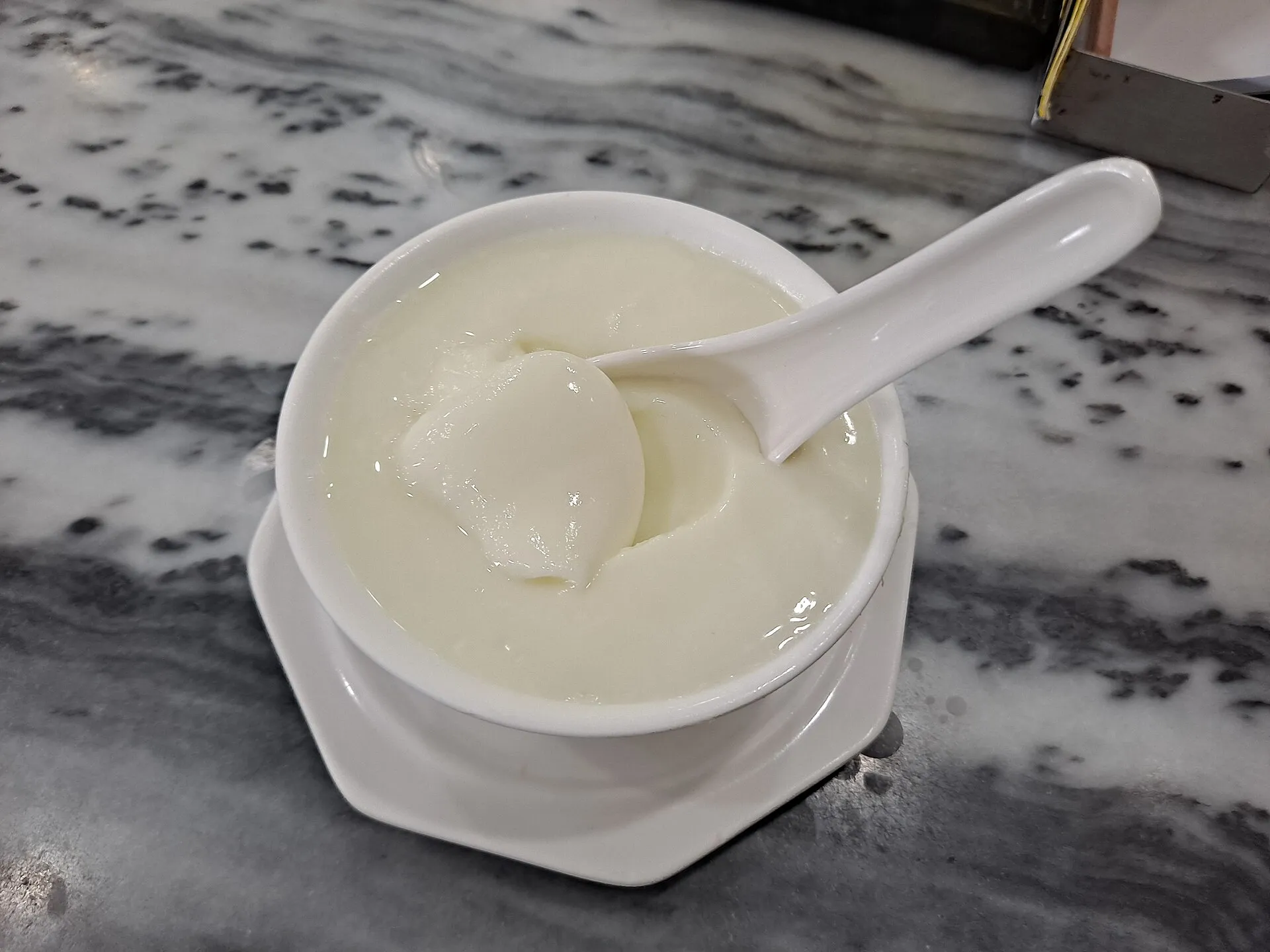 Photo: 钉钉 · CC BY-SA 4.0 Details
Which teahouses are long established?
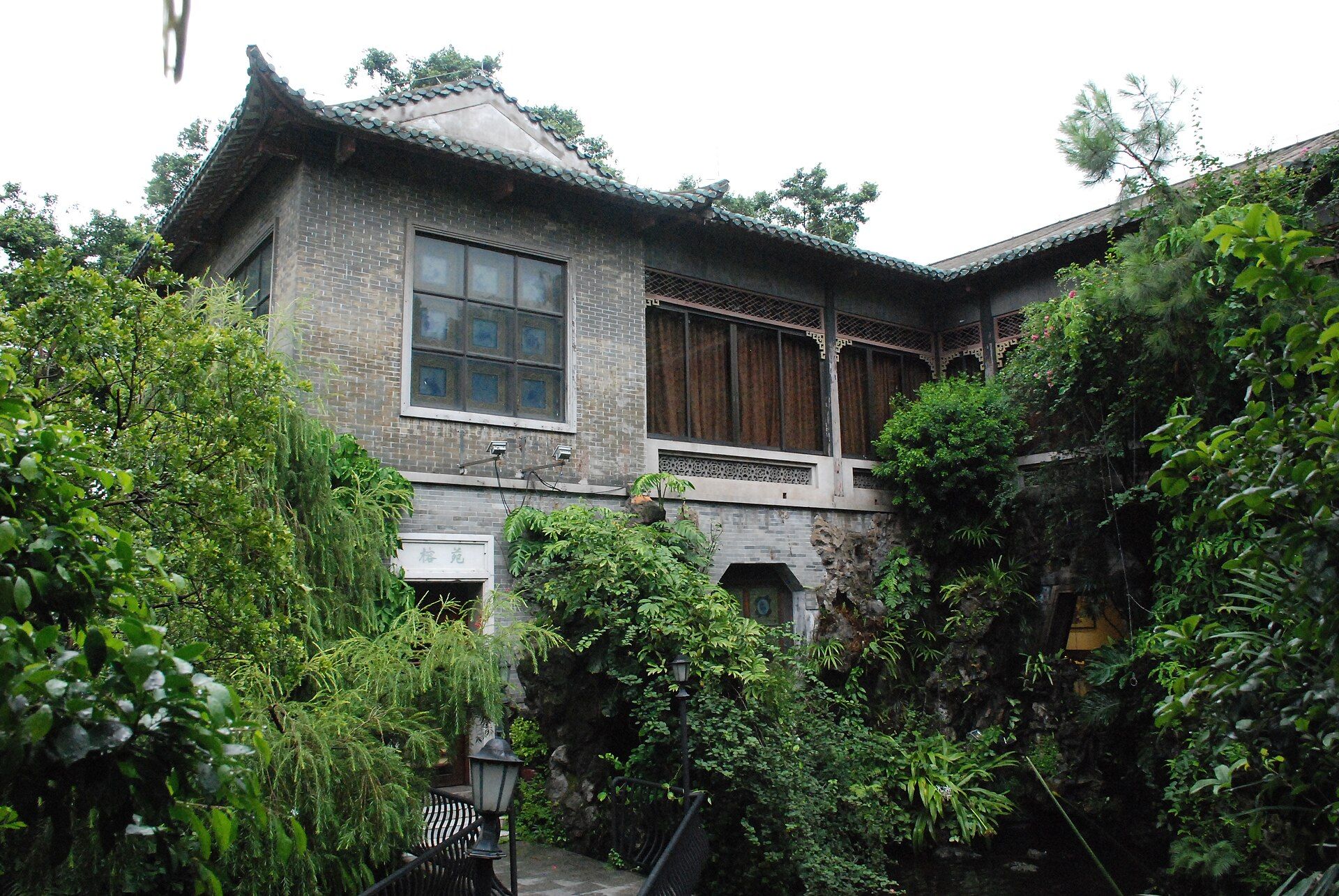
Chinese-language articles name 陶陶居 (Tao Tao Ju) as one of the oldest tea houses in the city, dated 1880. Its address is 广州市荔湾区第十甫路20号, listed by Wikivoyage near Changshou Road Station on Line 1 (check the exit on a map). Another long-established name in Liwan is 泮溪酒家 (Panxi), a restaurant at 151 Longjin West Road (龙津西路151号, Wikivoyage). We could not confirm opening hours or founding dates for either from an official source, so check before you go.
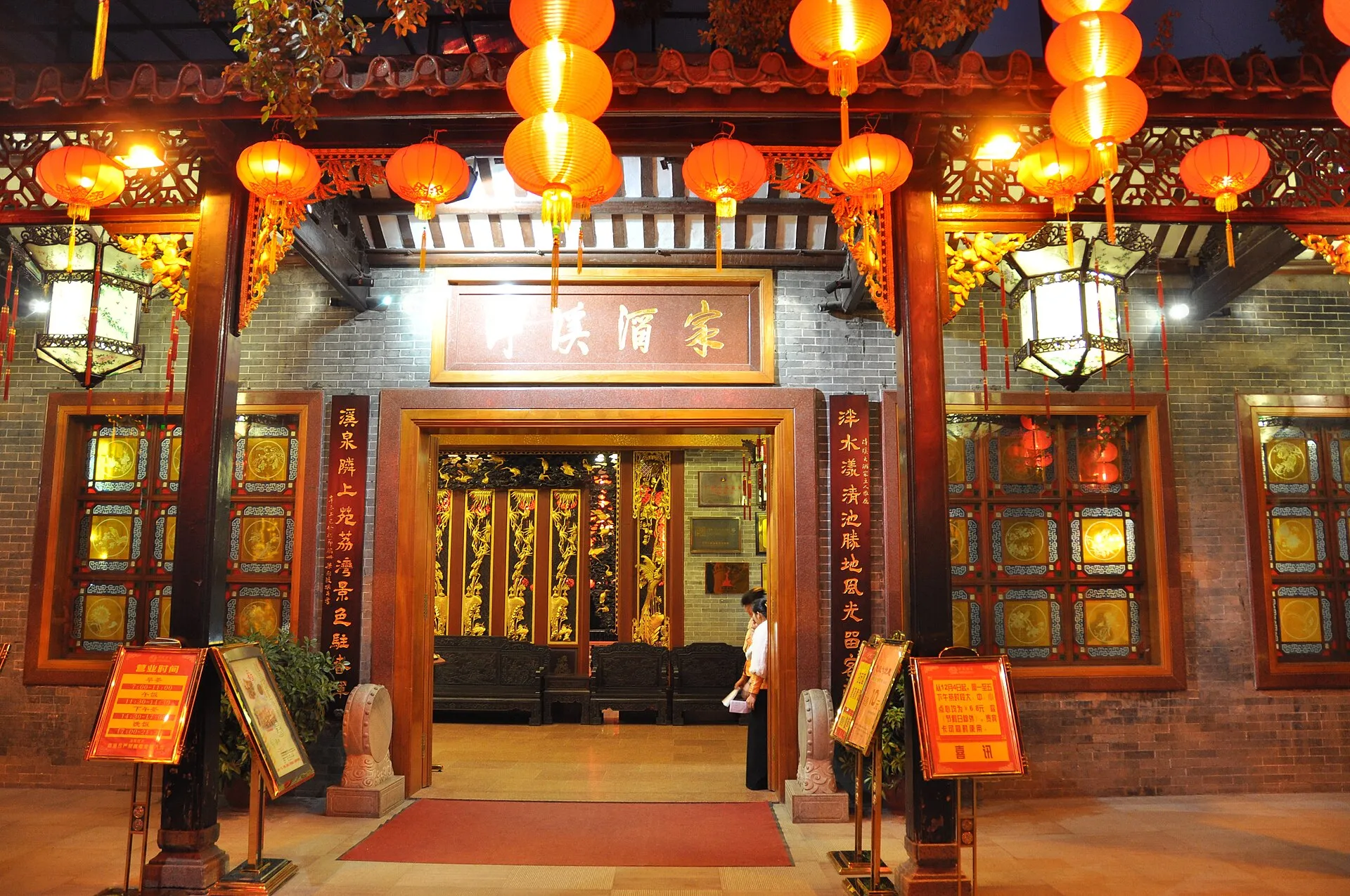 Photo: Michael Gwyther-Jones · CC BY 2.0 Details
Opinions on the famous names are mixed. A Reddit user wrote in July 2026 that places hyped on social media, such as 陶陶居 and 点都德, were “pretty disappointing”. That is one traveller’s view. Older and newer places are both worth a look. For Michelin-listed places, see the Michelin Guangzhou guide.
What are the manners at the table?
China Navigators lists two common signals. When someone pours your tea, tap two bent fingers (index and middle) on the table as a thank-you. When the pot is empty, leave the lid open or tilted so staff refill it.
What about pork, halal and vegetarian needs?
Many classic dim sum contain pork. Muslim and vegetarian travellers should read the halal and vegetarian food guide before choosing a teahouse. For what else to eat, see the Guangzhou food guide.
Addresses in Chinese
- Tao Tao Ju (Dishifu Road), Liwan 陶陶居(第十甫路)广州市荔湾区第十甫路20号Address from several travel pages; a restaurant that is often named for its long history
Traps and how to avoid them
- Ordering from a QR menu without translating it
A table QR menu may be hard to read without translation. Use a camera-translate tool, or ask the staff to point out dishes by photo.
- Assuming the tea is free
A tea charge per person is usually added to the bill. Under the 2026 rules, the restaurant must offer a choice of teas if it charges it.
- Eating pork by accident
Many classic dim sum, including siu mai, char siu bao and many fillings, contain pork. See the halal and vegetarian guide if you avoid it.
- Paying a freshly-made price for a pre-made dish
The 2026 rules let a restaurant price the same item differently by method, so read the 传统方式现场制作 label on the menu.
FAQ
What is the difference between dim sum, yum cha and morning tea?
They overlap. Dim sum (点心) is the small dishes, yum cha (饮茶) is the habit of drinking tea, and morning tea (早茶) is the local name for the meal. Guangzhou people say 饮早茶.
How much is the tea charge in Guangzhou?
Travel sites report ¥10 to ¥20 per person. It is charged per person. Since May 1, 2026, a restaurant that charges it must offer a choice of teas.
How much does a dim sum meal cost?
A travel guide says plates cost ¥15 to ¥45, with ¥80 to ¥200 for two at a standard restaurant and ¥200 to ¥500 at upscale places.
Are the famous chains worth it?
Opinions differ. A Reddit user in July 2026 wrote that places hyped on social media such as 陶陶居 and 点都德 were disappointing. That is one traveller's view.
Do I need to book?
We found no official booking rules. Ask the restaurant, or check its WeChat mini-program or listing for a queue or booking option.
Sources
- Guangzhou Morning Tea Heritage Protection Regulation, in force May 1, 2026 (Yangcheng Evening News, via gmw.cn)
- Sixth Tone: All That and Dim Sum, Canton moves to regulate morning tea (draft, October 15, 2025)
- China Navigators: Dim Sum Guide for Travelers (ordering, tea charge, prices)
- Reddit r/guangzhou: hyped dim sum places (traveller report, July 8, 2026)
- Reddit r/guangzhou: menu translation problems (traveller report, November 12, 2025)
Spotted something out of date? Tell us and we will check it.