Guangzhou Food Guide: What to Eat and Where to Start
Last checked October 19, 2026 against official sources. How we check

Quick answer
Cantonese food in Guangzhou centres on dim sum, roast meats such as goose, wonton noodles, congee and sweet soups. Walk Liwan (Shangxiajiu, Enning Road, Yongqing Fang) for old-style shops and Tianhe for modern restaurants. Ask whether tea and table fees are per person, and confirm seafood prices by weight before it is cooked.
Key facts
| Old-style food | Liwan: Shangxiajiu, Enning Road, Yongqing Fang |
|---|---|
| Cheapest full meals | Noodles, congee, roast-meat rice plates (Wander in China) |
| Ask first | Tea or table fees per person; seafood priced by weight |
| Halal search | Amap: search 清真 (Reddit tip) |
What should you eat in Guangzhou?
Cantonese cooking favours steaming and stir-frying, balanced flavours and little grease, according to Wikipedia’s overview. It also prizes wok hay (镬气), the “breath of the wok” from fast, hot cooking. The table lists the dishes you will meet most, with the characters to point at on a menu.
| Dish | Chinese | What it is | Where it is typically eaten |
|---|---|---|---|
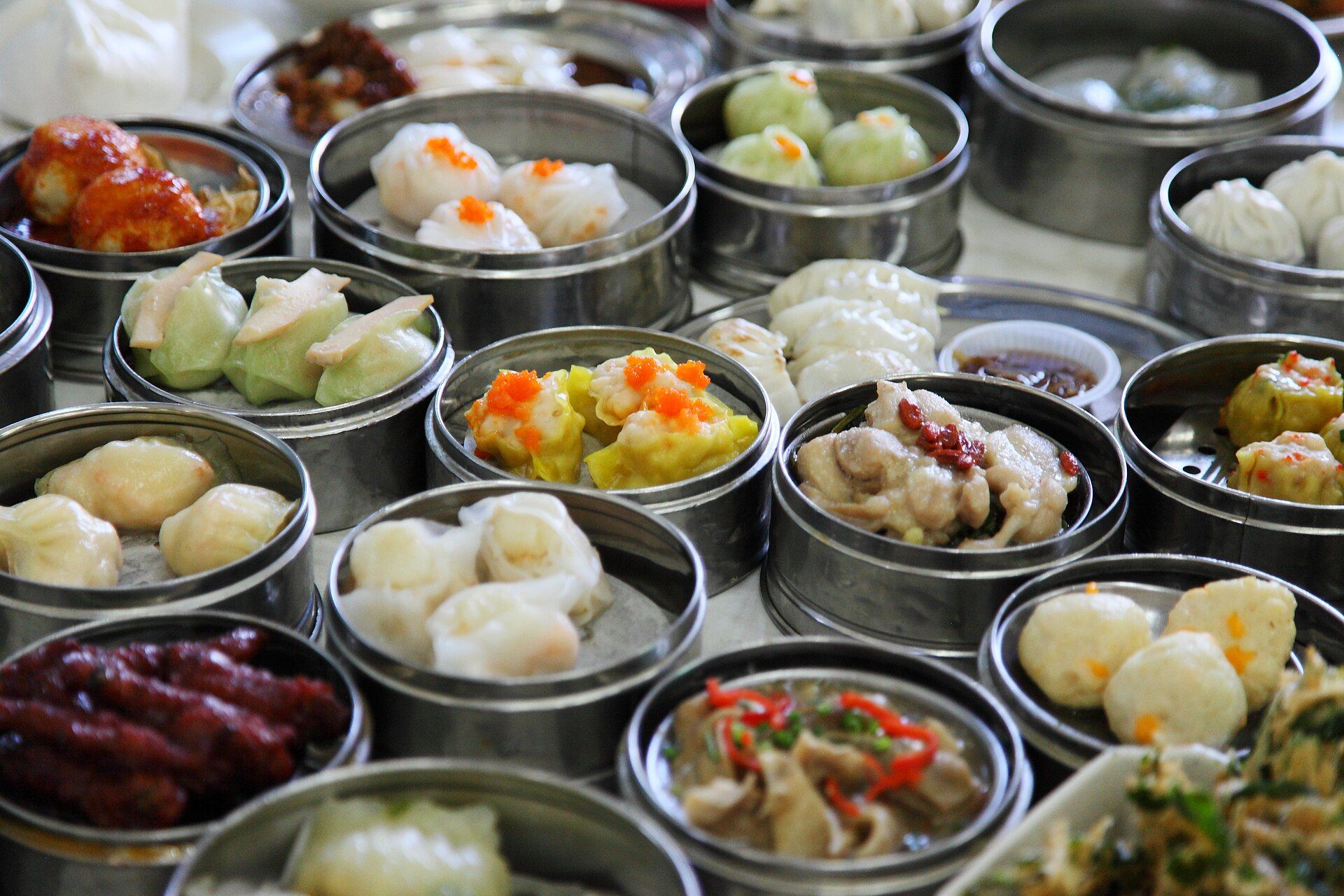
| Dim sum | 点心 | Small steamed and fried dishes eaten with tea | Teahouses and hotel restaurants, mostly morning to afternoon |
| Rice noodle roll | 肠粉 | Steamed rice sheets rolled around meat, shrimp or plain, with soy sauce | Dim sum menus and small breakfast shops |
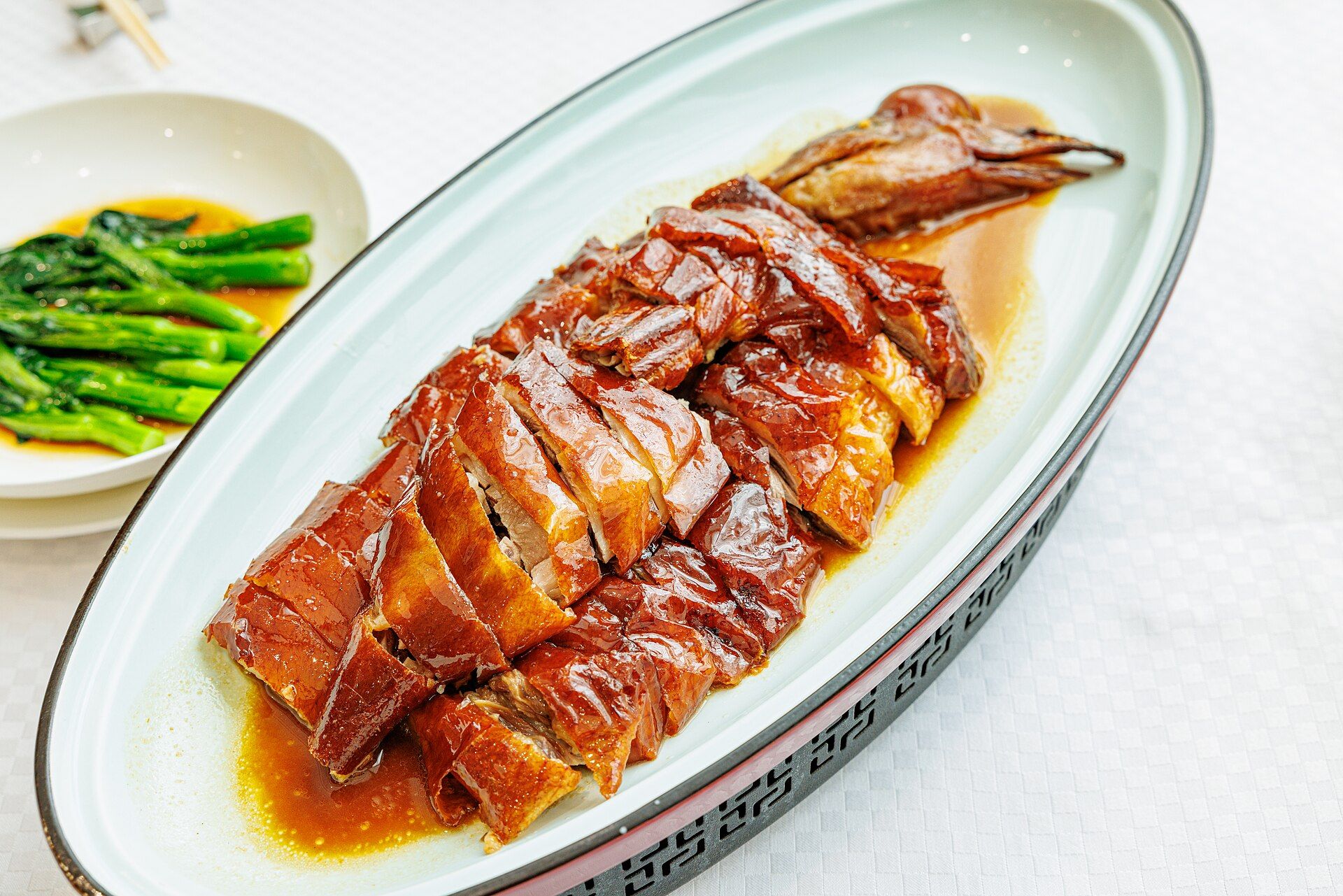
| Roast goose | 烧鹅 | Roast meat with crisp skin, part of the roast-meat (烧味) group | Roast-meat shops and restaurants; also sold by weight |
| Barbecued pork | 叉烧 | Pork marinated with honey or plum sauce and roasted | Roast-meat shops, dim sum (as buns) |
| Soy sauce chicken | 豉油鸡 | Chicken cooked in soy sauce | Roast-meat shops and traditional restaurants |
| White-cut chicken | 白切鸡 | Poached chicken, served with a ginger and spring onion dip | Restaurants and roast-meat shops |
| Wonton noodles | 云吞面 | Thin egg noodles and wontons in clear broth | Noodle shops, open most of the day |
| Congee | 粥 | Rice porridge; sampan congee (艇仔粥) and pork and century egg congee (皮蛋瘦肉粥) are classics | Congee shops, breakfast and late meals |
| Claypot rice | 煲仔饭 | Rice steamed in a clay pot with toppings layered on it | Claypot restaurants, usually dinner |
| Herbal soup | 老火汤 | Clear broth simmered for hours, often with herbs | Home-style restaurants, set meals |
| Sweet soup | 糖水 | General name for Cantonese desserts, such as red bean (红豆沙) or black sesame (芝麻糊) | Dessert shops, after dinner |
| Double-skin milk | 双皮奶 | A steamed milk pudding served chilled or warm | Dessert shops |
Dish names, descriptions and the roast-meat and soup categories are from Wikipedia and Wander in China. Where a dish is “typically eaten” is a general guide, not a venue list. Broth, sauces and fillings vary by shop.
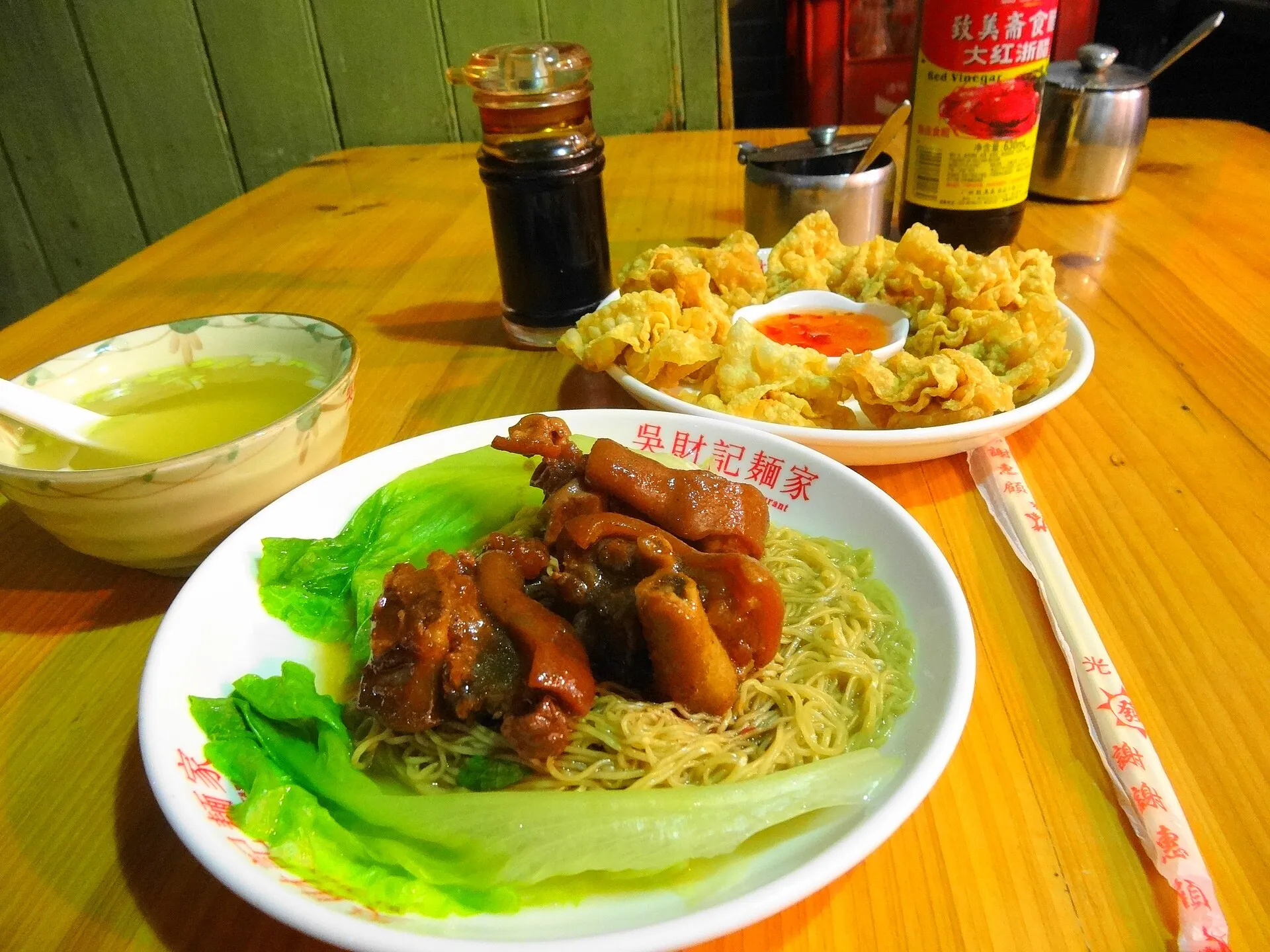 Photo: DragonSamYU · CC BY-SA 4.0 Details
When do you eat what?
Cantonese eating runs on formats more than on three set meals.
- Morning tea (早茶). Tea with dim sum, a social meal for families and groups, mostly morning to early afternoon. Teahouses charge a tea fee per person, and Chinavigators gives a tea charge of ¥10–20 per person, plates of ¥15–45 and ¥80–200 for two (a travel site, so treat the figures as indicative). Read the dim sum guide for the ordering methods and the Cantonese tea culture guide for the teas and table manners. Since May 1, 2026, a city regulation requires clear pricing and a choice of teas where a tea fee is charged.
- Roast meats (烧味). Goose, pork and chicken are chopped to order and eaten over rice or by weight. Wikipedia notes that siu mei is meat only, so add a vegetable dish.
- Congee and noodle shops. The cheapest full meals, per Wander in China. Wonton noodles and congee work for breakfast, lunch or a late bite.
- Dessert shops. Wikipedia says sweet soups are served after the evening meal. They are a good way to end an evening in Liwan.
- Evening restaurant meals. Claypot rice, soups, steamed fish and stir-fries. Wikipedia notes that restaurants stop the bamboo-basket dishes after yum cha and switch to an evening menu.
- Night snacks. Snack streets and late noodle or congee shops stay open late; see Guangzhou at night.
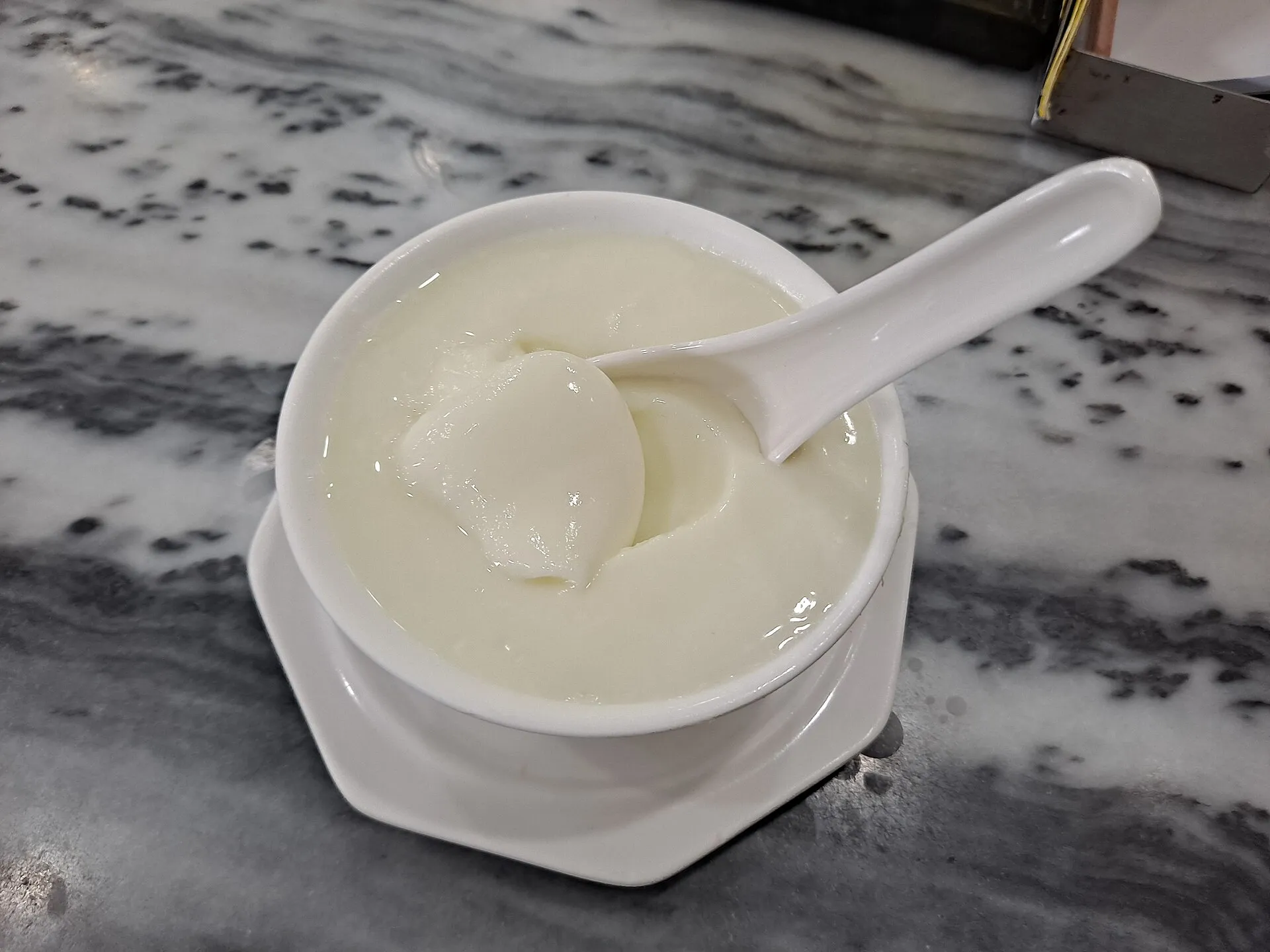 Photo: 钉钉 · CC BY-SA 4.0 Details
Where should you walk to eat?
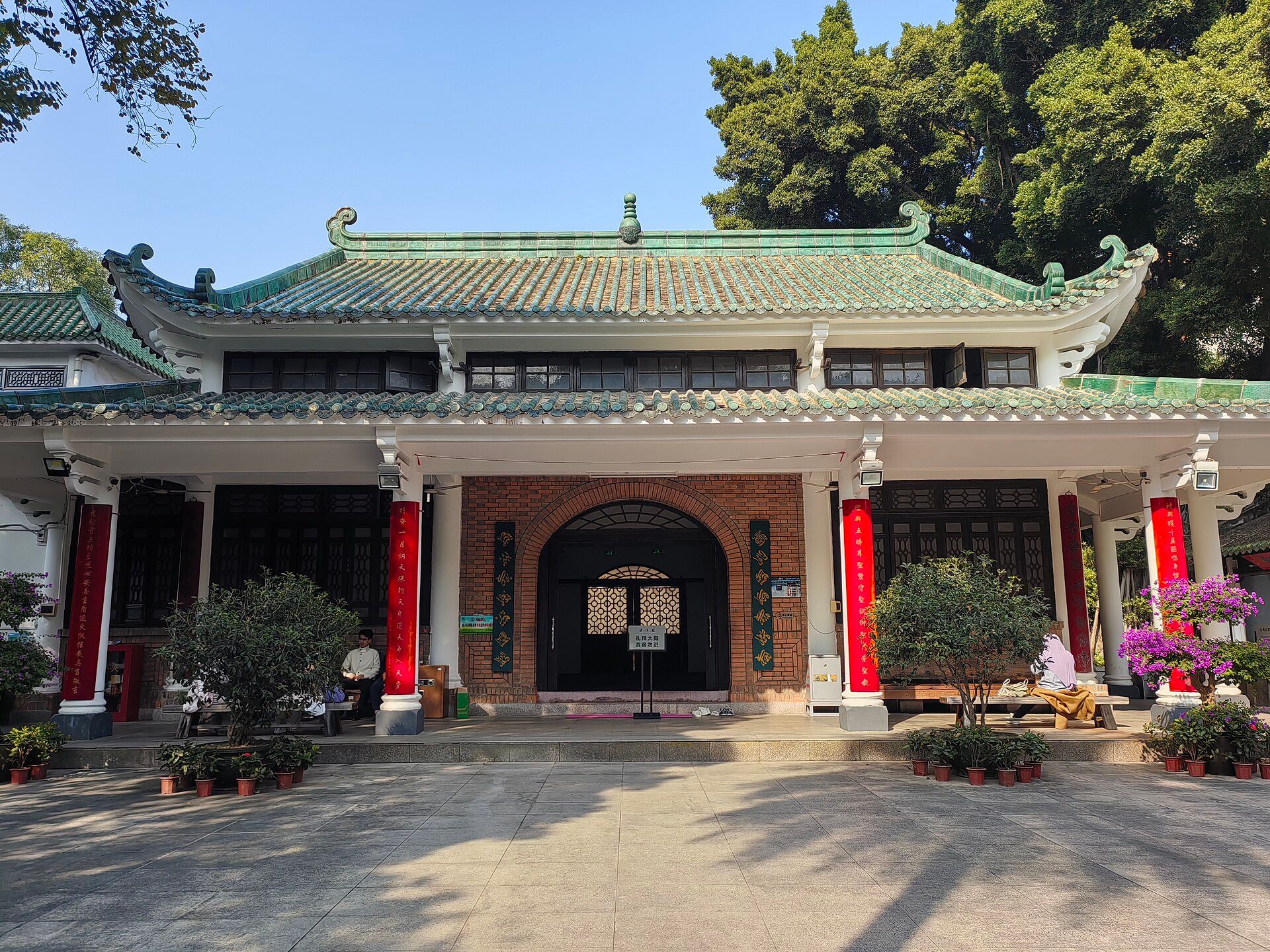
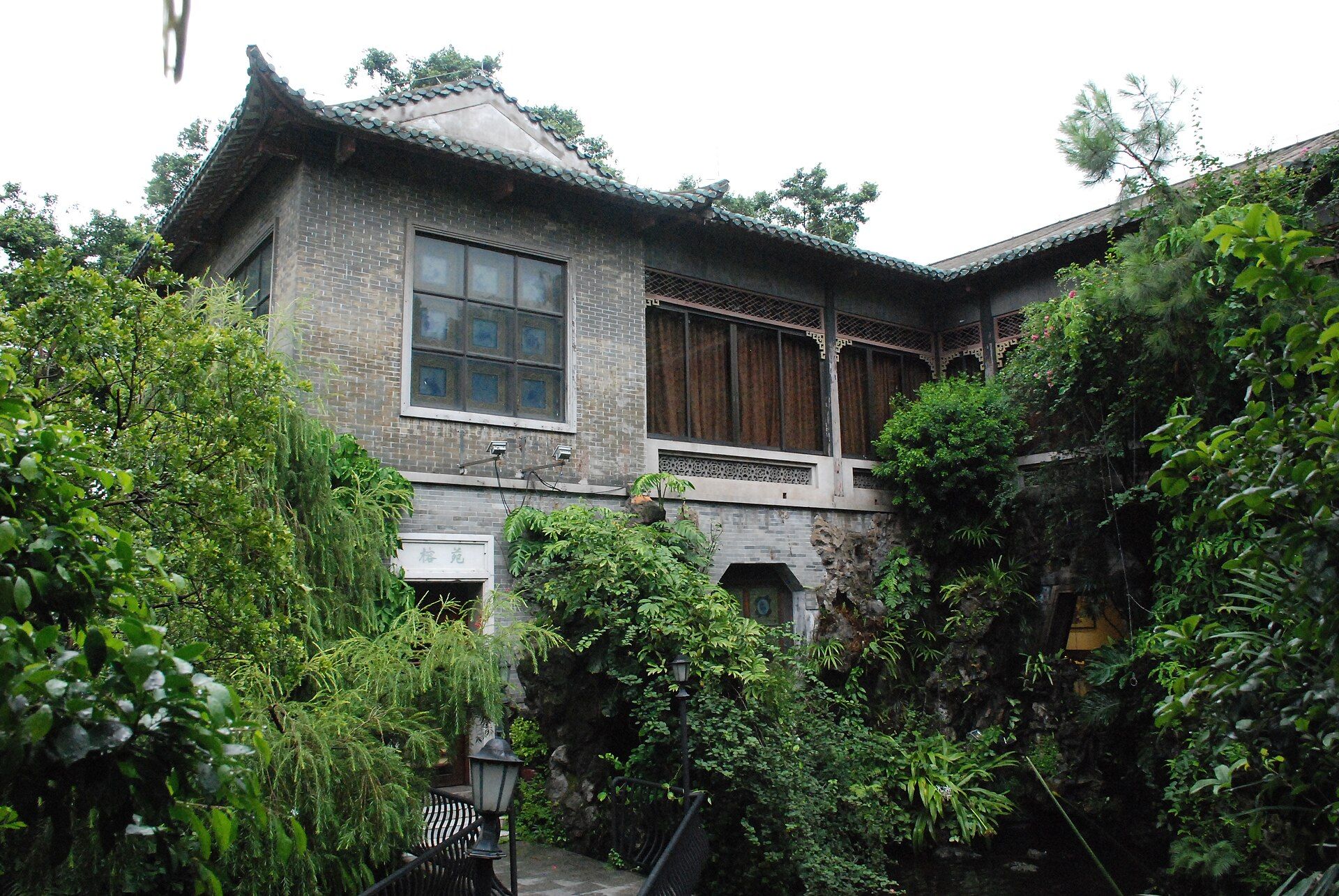
- Liwan (荔湾). Shangxiajiu, Enning Road and Yongqingfang. Wikivoyage lists Tao Tao Ju (陶陶居, 20 Dishifu Road, 第十甫路20号, near Changshou Road station on Line 1) and Panxi Restaurant (泮溪酒家, 151 Longjin West Road) as classic dim sum places; the entry is dated and says reservations are recommended at Tao Tao Ju. One Reddit user wrote in July 2026 that hyped places such as Tao Tao Ju and Dian Dou De were disappointing, so judge for yourself. Wander in China advises walking a few streets off the main pedestrian route for simpler shops.
- Yuexiu (越秀). Classic restaurants, noodle shops and markets near Beijing Road. Huifu East Road is a food street; see the Beijing Road guide.
- Tianhe and Zhujiang New Town. Modern restaurants and mall food courts, generally pricier. Michelin-listed places are covered in the Michelin guide.
- Xiaobei (小北). The main halal area, on Line 5; see the halal and vegetarian guide.
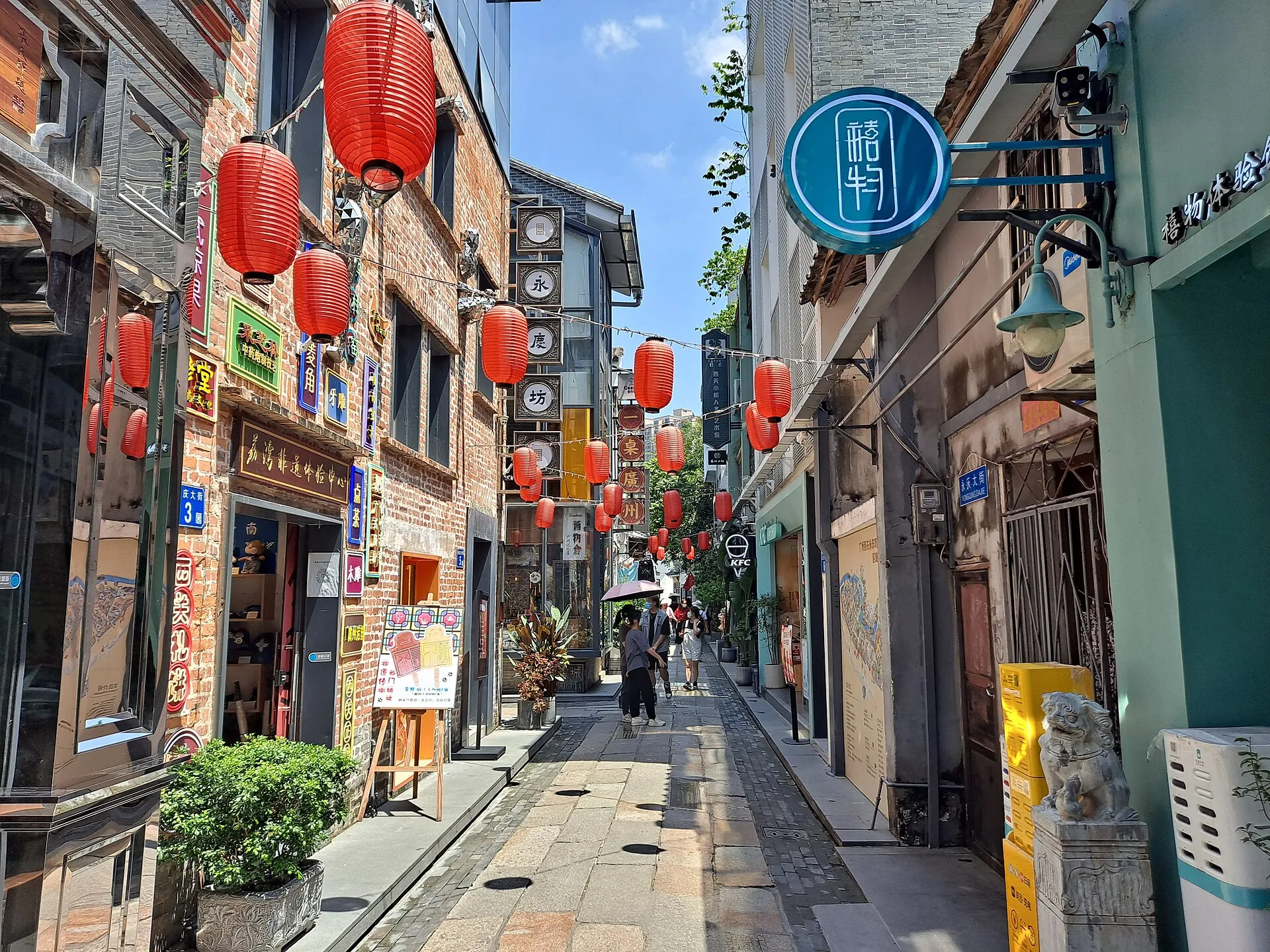 Photo: 钉钉 · CC BY-SA 4.0 Details
How do you order with QR menus and pay?
Many restaurants now seat you and give you a QR code on the table. Chinavigators lists three ordering methods at teahouses: trolleys, a paper tick sheet and QR menus. The usual flow is to scan the code, pick dishes, then send the order. If the QR flow does not work for you, ask staff for a paper or picture menu. Point at the character or photo, and use a translation app on the menu if needed.
- Ask whether tea and table fees are charged per person.
- Portions are for sharing. Check whether soup comes in a small bowl or a large pot.
- Ask before sharing a table at a busy teahouse.
- For live seafood, confirm the price per unit and the weight before it is cooked.
- Pay with Alipay or WeChat Pay if possible; see the payment guide.
- Useful phrases: 请少放辣椒 (less chilli), 请不要放香菜 (no coriander), 请帮我结账 (bill, please). The Chinese phrases page has more.
Menus under the May 2026 morning tea regulation must label dim sum as 传统方式现场制作 (traditionally made on site) or 非传统方式制作 (not made that way), and menu, table tags and app prices must match. If a QR price differs from the menu, ask staff.
What about allergies and dietary needs?
Shared kitchens make cross-contact hard to avoid, and a generic translation card rarely covers a specific allergy. Write the allergen in Chinese (for example 花生, peanut; 虾, shrimp; 贝类, shellfish) and show it before ordering. Wander in China lists shellfish, fish, peanuts, sesame, soy, wheat and pork as common allergens, and advises confirming sauces, stocks and cross-contact risks. Ask staff what sauces and oils a dish uses.
Vegetarians should ask about stocks, oyster sauce, lard and dried shrimp. Muslim visitors should look for 清真 signs, with the caveats in the halal and vegetarian guide. One Reddit user advised searching 清真 in Amap, and another asked in October 2026 how to tell restaurants you eat only vegetarian food. We cannot tell you any restaurant is safe for a serious allergy; ask the staff and decide for yourself.
Where to next?
For Michelin-listed places, see the Michelin Guangzhou list. For evening food and drink, see Guangzhou at night. For things to do between meals, see things to do in Guangzhou.
Traps and how to avoid them
- Live seafood priced by weight
Confirm the price per unit and the weight before the kitchen cooks it. The total can be higher than expected.
- Allergies and cross-contact
Dim sum kitchens prepare many dishes in shared spaces. Carry a detailed Chinese allergy card instead of relying on a generic translation.
- Hidden animal products for vegetarians
Ask whether stocks, oyster sauce, lard or dried shrimp are used.
FAQ
What is Cantonese food like?
It favours fresh ingredients, light seasoning and steaming, plus roast meats and slow-boiled soups. Wander in China lists dim sum, roast meats, wonton noodles, claypot rice, congee and desserts as the staples.
Where is the best food area in Guangzhou?
Wander in China points to Liwan for old-style food (Shangxiajiu, Enning Road, Yongqing Fang), Yuexiu for classic restaurants and Tianhe for modern dining. It advises walking a few streets off the main pedestrian route for simpler shops.
How do I find halal food?
A Reddit user advised installing Amap and searching Muslim or 清真 (qingzhen). See the halal and vegetarian guide for areas.
What is a cheap meal in Guangzhou?
Wander in China says noodles, congee and roast-meat rice plates are the most economical full meals. It gives no prices; read the posted menu.
Sources
- Wander in China: Guangzhou food guide
- Reddit r/travelchina thread, May 24, 2026 (Amap search for 清真)
- Guangzhou Morning Tea Heritage Protection Regulation (Yangcheng Evening News, via gmw.cn)
- Wikipedia: Cantonese cuisine
- Chinavigators: dim sum guide for travellers (unofficial)
- Wikivoyage: Guangzhou/Liwan (Tao Tao Ju, Panxi, dated)
- Reddit r/guangzhou thread, July 8, 2026 (hyped teahouses)
- Reddit r/travelchina thread, October 5, 2026 (telling restaurants you eat vegetarian)
Spotted something out of date? Tell us and we will check it.